

Introduction: The Digital Marketing Revolution
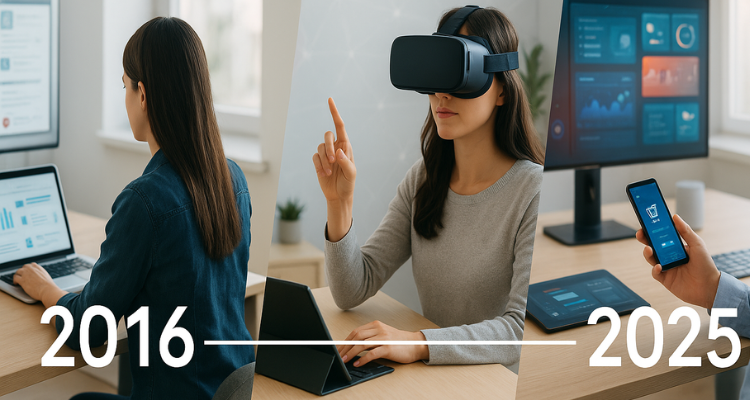
The digital marketing landscape has undergone a remarkable transformation over the past decade. From 2016 to 2025, we’ve witnessed unprecedented changes in how brands connect with consumers online. What began as simple social media posts and basic SEO has evolved into sophisticated strategies powered by artificial intelligence and immersive technologies.
This revolution has redefined marketing fundamentals, creating new opportunities and challenges for businesses of all sizes. Whether you’re a seasoned digital marketer or just beginning your journey, understanding this evolution is crucial for staying competitive in today’s fast-paced digital world.
Let’s explore how digital marketing has transformed over the past decade and what these changes mean for marketers today.
How Has Digital Marketing Changed Since 2016?
From Mobile-First to Omnichannel Experiences
In 2016, the phrase “mobile-first” dominated marketing discussions as smartphones became the primary device for internet access. Marketers rushed to optimize websites and campaigns for mobile users, recognizing the shift in consumer behavior.
Fast forward to 2025, and we’ve moved beyond mobile-first to truly seamless omnichannel experiences. Today’s consumers expect fluid interactions across devices, platforms, and touchpoints. The boundaries between physical and digital shopping experiences have blurred completely.
Modern marketers now orchestrate cohesive brand experiences that follow consumers across smartphones, wearables, smart home devices, and emerging technologies like augmented reality glasses. This omnichannel approach has become the new standard for engaging with increasingly tech-savvy audiences.
The Rise and Evolution of Social Media Marketing
Remember when Facebook was the dominant social platform for marketers in 2016? While Instagram was gaining traction, platforms like TikTok didn’t even exist. Social media marketing primarily focused on organic reach, with paid promotion as a supplementary strategy.
The social media marketing landscape of 2025 looks dramatically different. Short-form video content dominates across platforms, while social commerce allows consumers to discover and purchase products without leaving their favorite apps. The creator economy has transformed how brands collaborate with influencers.
Social platforms have evolved from simple communication channels to powerful marketing ecosystems with sophisticated targeting capabilities, integrated shopping features, and advanced analytics that track the complete customer journey.
Content Marketing: From Blogs to Multi-Format Storytelling
In 2016, content marketing typically centered around blog posts, with video slowly gaining momentum. Marketers focused on keyword-rich articles to improve search rankings, while content distribution largely depended on email newsletters and social sharing.
Today’s content marketing strategies embrace diverse formats tailored to specific platforms and audience preferences. Interactive content, personalized video, podcasts, and immersive experiences have joined traditional blogs in the marketer’s toolkit.
The focus has shifted from content volume to creating high-quality, data-driven assets that serve specific purposes throughout the customer journey. Modern content marketing blends storytelling with strategic distribution and performance analysis.
The Technology Revolution in Digital Marketing
How AI Transformed Marketing Practices
Artificial intelligence was more theoretical than practical for most marketers in 2016. Basic automation tools existed, but truly intelligent systems were still emerging in the marketing technology landscape.
By 2025, AI has become indispensable across all marketing functions. From content creation and personalization to predictive analytics and automated campaign optimization, artificial intelligence enhances nearly every aspect of digital marketing.
AI-powered tools now handle routine tasks, analyze vast datasets to uncover insights, and enable hyper-personalization at scale. The most successful marketers have become adept at combining human creativity with machine intelligence to deliver exceptional customer experiences.
The Search Evolution: From Keywords to Intent and Conversational AI
SEO in 2016 revolved around keywords, backlinks, and technical optimization. Voice search was emerging but hadn’t yet transformed search behavior. Google dominated the search landscape, and marketers focused primarily on ranking in the top ten results.
Today’s search ecosystem is vastly more complex and sophisticated. Semantic search, natural language processing, and AI-powered algorithms understand user intent beyond simple keywords. Voice and visual search have become mainstream, while zero-click searches deliver answers directly in search results.
The rise of AI search assistants has created new opportunities for marketers to optimize content for conversational queries and featured snippets. SEO now encompasses optimization for multiple search environments, including traditional engines, voice assistants, and app stores.
Data and Analytics: From Basic Metrics to Predictive Insights
Marketing analytics in 2016 primarily looked backward, measuring past campaign performance through metrics like clicks, conversions, and ROI. Data collection was often fragmented across platforms, making it challenging to get a complete view of customer interactions.
The data landscape of 2025 is characterized by unified customer data platforms, advanced attribution models, and predictive analytics that forecast future trends. Privacy-first measurement solutions have emerged in response to regulatory changes and the demise of third-party cookies.
Marketers now leverage real-time dashboards that connect marketing activities directly to business outcomes. The most sophisticated organizations use machine learning to identify patterns and opportunities that would be impossible to detect manually.
The Changing Consumer Landscape
How Privacy Concerns Reshaped Digital Marketing
Privacy was certainly a concern in 2016, but most consumers readily shared personal data in exchange for convenience. Marketers relied heavily on cookies and third-party data to track users across the web and deliver targeted advertising.
The privacy revolution that followed—driven by regulations like GDPR and CCPA, along with platform changes from Apple and Google—fundamentally altered how marketers collect and use customer data. By 2025, third-party cookies have largely disappeared, and consent-based marketing has become the norm.
Today’s successful marketers prioritize first-party data strategies, transparent data practices, and value exchanges that give consumers clear benefits for sharing information. Privacy-enhancing technologies allow personalization without compromising user confidentiality.
The Shift to Authentic, Purpose-Driven Marketing
Brand messaging in 2016 often focused primarily on product features and benefits. While some pioneering brands embraced purpose-driven marketing, it wasn’t yet a mainstream approach.
By 2025, authentic brand purpose has become essential for connecting with consumers, particularly younger generations. Customers increasingly support companies that demonstrate genuine commitment to social and environmental causes.
Digital marketing now regularly incorporates transparent storytelling about brand values, sustainability initiatives, and social impact. The most successful campaigns balance commercial objectives with authentic purpose-driven messaging that resonates with conscious consumers.
Personalization: From Basic Segmentation to Individualized Experiences
Personalization in 2016 typically meant inserting a customer’s name in an email or showing product recommendations based on past purchases. Most personalization relied on broad demographic segments rather than truly individualized experiences.
The personalization capabilities of 2025 are dramatically more sophisticated. AI-powered systems analyze behavioral patterns, preferences, and contextual signals to deliver truly individualized experiences at scale across all touchpoints.
Dynamic content, predictive recommendations, and real-time personalization have transformed how brands interact with customers. The most effective marketers balance personalization with privacy, creating relevant experiences without crossing into intrusive territory.
Digital Marketing Channels and Tactics in 2025
Email Marketing: From Batch Campaigns to Automated Journeys
Email marketing in 2016 typically involved batch-and-blast campaigns with basic segmentation. While automation existed, most marketers used it primarily for simple triggers like welcome sequences and abandoned cart reminders.
Today’s email marketing leverages advanced automation, dynamic content, and intelligent testing to deliver highly relevant messages. AI-powered tools optimize send times, subject lines, and content based on individual recipient behavior.
The inbox experience has evolved with interactive elements, AMP for email, and seamless integration with other channels. Rather than standalone campaigns, email now functions as one component in sophisticated cross-channel customer journeys.
Performance Marketing: From Basic PPC to Algorithmic Optimization
Paid digital advertising in 2016 required significant manual management. Marketers spent hours adjusting bids, testing ad creative, and optimizing landing pages. Machine learning was beginning to influence ad platforms but hadn’t yet transformed campaign management.
The performance marketing landscape of 2025 is dominated by intelligent systems that continuously optimize campaigns across multiple platforms. AI-powered tools handle bidding, budget allocation, creative testing, and audience targeting with minimal human intervention.
Modern marketers focus on strategic direction and creative development while leveraging technology to handle tactical execution. This approach delivers superior performance while freeing human marketers to focus on strategic innovation.
Video Marketing: From YouTube to Omni-Platform Visual Storytelling
Video marketing in 2016 typically centered around YouTube, with Facebook video gaining momentum. Most brands produced traditional commercial-style content or basic explainer videos that required significant production resources.
Today’s video marketing ecosystem spans numerous platforms and formats, from short-form social videos to interactive shoppable content and personalized video messages. Advanced tools have democratized video creation, allowing brands of all sizes to produce engaging visual content.
The most effective video strategies blend platform-specific approaches with consistent brand storytelling, creating content ecosystems that engage viewers across the entire customer journey.
The Future of Digital Marketing: Emerging Trends and Technologies
How Web3 and Blockchain Are Influencing Marketing
In 2016, blockchain was primarily associated with cryptocurrencies, and few marketers considered its potential impact on the marketing landscape. Web3 wasn’t yet part of the marketing vocabulary.
By 2025, blockchain technology has begun transforming aspects of digital marketing, particularly in areas like transparency, authentication, and consumer data ownership. NFTs have created new engagement opportunities, while decentralized platforms offer alternatives to traditional marketing channels.
Forward-thinking marketers are exploring token-gated content, blockchain-verified advertising metrics, and direct community ownership models. While Web3 adoption varies across industries, its influence on marketing continues to grow.
Immersive Technologies: AR, VR, and the Metaverse
Virtual and augmented reality existed in 2016 but were primarily novelties for most marketers. Few brands had developed meaningful AR/VR strategies beyond experimental campaigns.
The immersive technology landscape of 2025 has matured considerably. AR features have become standard in e-commerce experiences, allowing consumers to visualize products in their own spaces before purchasing. Virtual environments provide new spaces for brand experiences and community building.
As metaverse platforms evolve, innovative marketers are creating persistent brand presences that blur the lines between physical and digital worlds. These immersive experiences offer unprecedented opportunities for engagement and emotional connection.
Voice and Conversational Marketing Strategies
Voice assistants were emerging in 2016, but voice-specific marketing strategies were in their infancy. Few brands had optimized for voice search or developed skills for platforms like Alexa and Google Assistant.
Today’s conversational marketing landscape encompasses voice assistants, chatbots, and messaging platforms that facilitate natural interactions between brands and consumers. Voice commerce has become a significant sales channel for certain product categories.
The most effective conversational strategies provide genuine utility while maintaining consistent brand voice across all dialogue-based touchpoints. As AI continues to improve, these conversational interfaces will become increasingly sophisticated.
Building Digital Marketing Capabilities for the Future
The Evolving Marketing Team: New Roles and Skill Sets
Marketing teams in 2016 typically included specialists in areas like social media, content, SEO, and paid advertising. Technical skills were becoming more important, but traditional marketing backgrounds still dominated the industry.
The marketing department of 2025 features diverse skill sets that blend marketing expertise with data science, technology, and creative production. New roles have emerged around AI management, customer data orchestration, and experience design.
Successful organizations foster collaboration between specialized experts while ensuring all team members understand fundamental marketing principles. Continuous learning has become essential as technologies and platforms continually evolve.
Balancing Automation and Human Creativity
Automation in 2016 typically handled simple, repetitive tasks while human marketers managed strategic and creative work. The boundary between human and machine responsibilities was relatively clear.
Today’s marketing landscape features a complex partnership between human marketers and intelligent systems. AI handles increasingly sophisticated tasks, including aspects of creative development that were once exclusively human domains.
The most successful marketers have learned to leverage automation for efficiency while preserving the human creativity, emotional intelligence, and ethical judgment that machines cannot replicate. This balanced approach delivers superior results compared to either extreme.
Measuring Success: Beyond Vanity Metrics to Business Impact
Marketing measurement in 2016 often focused on channel-specific metrics like page views, followers, and click-through rates. Attribution models were developing but still struggled to capture the full customer journey.
The measurement framework of 2025 connects marketing activities directly to business outcomes like customer lifetime value, retention, and share of wallet. Advanced attribution models account for both online and offline touchpoints throughout the customer journey.
Modern marketers focus on metrics that demonstrate genuine business impact rather than vanity metrics that look impressive but don’t correlate with meaningful results. This approach has elevated the marketing function’s strategic importance within organizations.
Conclusion: Lessons from a Decade of Digital Transformation
The evolution of digital marketing from 2016 to 2025 offers valuable lessons for marketers navigating an ever-changing landscape. Adaptability has proven essential, as technologies and consumer behaviors continue to evolve at an accelerating pace.
The most successful organizations have balanced innovation with fundamentals, embracing new technologies while maintaining focus on core marketing principles. Customer-centricity has remained the north star guiding effective strategies amid technological disruption.
As we look to the future, one thing remains certain: the pace of change will continue to accelerate. The marketers who thrive will be those who combine technical fluency with creative thinking, ethical practices, and a genuine commitment to delivering value to customers.
The digital marketing journey from 2016 to 2025 has been remarkable, but it’s only the beginning of what promises to be an even more transformative decade ahead.
FAQ: Common Questions About Digital Marketing Evolution
1. What were the biggest changes in digital marketing between 2016 and 2025?
The most significant changes include the mainstream adoption of AI across all marketing functions, the shift to privacy-first strategies following the deprecation of third-party cookies, the rise of immersive and conversational interfaces, and the evolution from channel-specific tactics to truly integrated omnichannel experiences.
2. How has AI impacted digital marketing jobs?
AI has automated many routine tasks while creating new opportunities for marketers who can effectively leverage intelligent technologies. Rather than eliminating marketing jobs, AI has transformed them, shifting focus from tactical execution to strategic direction, creative development, and ethical oversight of increasingly powerful marketing systems.
3. What digital marketing skills are most valuable in 2025?
The most valuable skills combine technical fluency with strategic thinking and creative problem-solving. Data analysis, AI management, customer experience design, and ethical marketing practices have become particularly important. The ability to continuously learn and adapt remains perhaps the most essential skill in a rapidly evolving landscape.
4. How did privacy regulations change digital marketing strategies?
Privacy regulations like GDPR and CCPA, combined with platform changes from major tech companies, forced marketers to move away from third-party data dependency toward first-party data strategies and contextual targeting. This shift has ultimately led to more transparent, consent-based marketing approaches that build stronger customer relationships.
5. What marketing channels have grown the most since 2016?
Short-form video, conversational interfaces, immersive technologies, and connected TV have seen the most dramatic growth. However, the most significant change has been the integration of channels into cohesive ecosystems rather than treating them as separate marketing silos.